
Services
Digital X-Ray & Imaging in Grand Junction, CO
Imaging is used to answer a specific question about your spine, never as a routine step everyone goes through.
Short answer
Imaging is used to answer a specific question about your spine, never as a routine step everyone goes through.
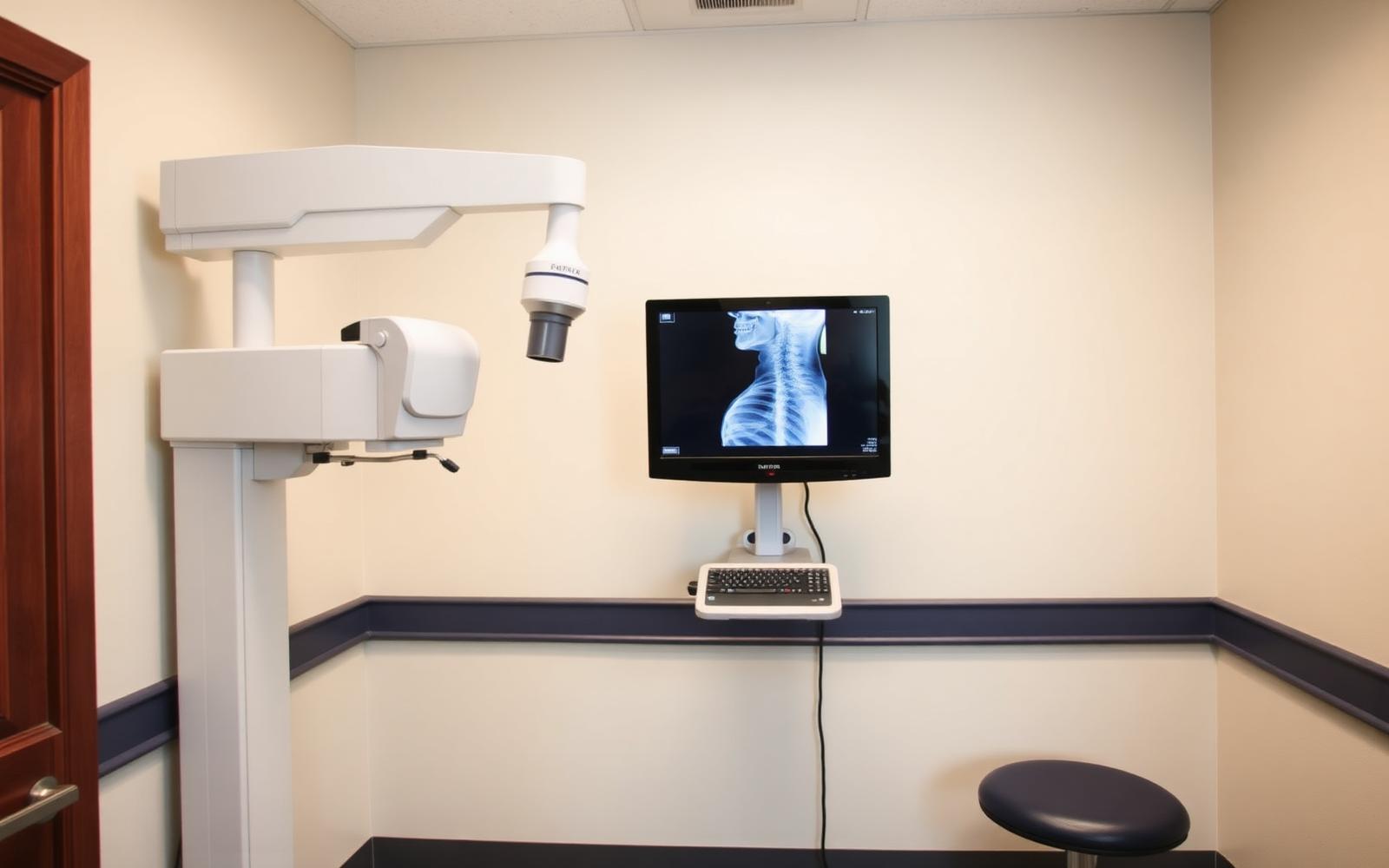
Overview
When imaging is recommended
Should your health history and examination suggest it, x-rays will be recommended to help pinpoint your specific issue. Findings such as a significant injury, unexplained symptoms, or a picture that does not match the exam are the kind of reasons imaging is ordered.
Digital imaging means the picture is available quickly and can be viewed on screen with you, so you can see what is being described rather than take it on faith.
An x-ray shows bone and alignment well. It does not show discs, nerves, or muscle directly, so it answers some questions and not others. Knowing which question you are asking is the difference between useful imaging and an unnecessary exposure.
Images also change plans. Findings can rule certain techniques out, redirect care toward a gentler approach, or prompt a referral. That is the value of taking them before treatment rather than after.
Type of imaging
Digital radiography, viewed on screen in the office.
Typical session
A few minutes. You stand or lie for each view and hold still.
When it is used
Only when history and examination indicate it, never routinely.
Review
Dr. Younker goes through your own images with you and explains what they mean.
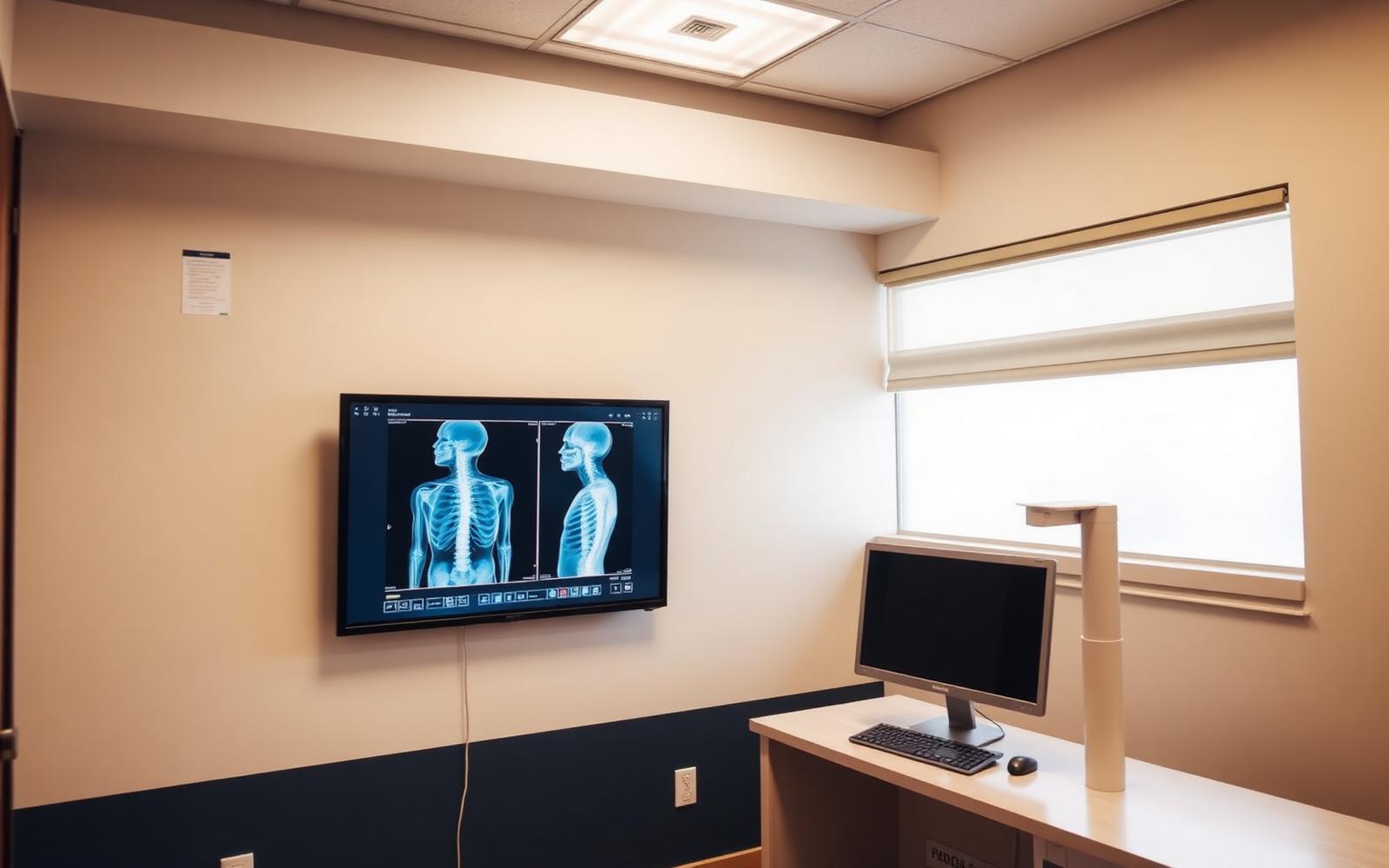
The equipment
Why digital rather than film
A digital detector replaces the film cassette, so the image appears on the monitor moments after the exposure instead of after processing. Retakes for positioning are rare, which is one of the ways total exposure stays low.
On screen, images can be zoomed, adjusted for contrast, and measured. That is what makes it practical to turn the monitor toward you and point out exactly what is being described.
Who it may suit
Concerns this is commonly considered for
Suitability is decided after your consultation and examination, not from a list.
Recent trauma or accident
Symptoms that do not fit the exam
Suspected degenerative change
Alignment questions before adjusting
Ruling out contraindications to care
Before treatment
The questions imaging is asked to answer
Before any view is taken, there is a specific question: is there a fracture, is the alignment what the exam suggests, is degenerative change present, is there something that makes a planned technique inappropriate.
If the examination already answers the question, imaging adds exposure without adding information. That is why not every new patient is x-rayed.
In the room
What a session involves
The decision
Imaging is discussed with you first, including why it is being recommended and what it is expected to show.
Taking the images
You are positioned for the specific views needed. The process takes only a few minutes.
Reviewing findings
Dr. Younker goes through the images with you and explains how they change, or do not change, the recommended plan.
Part of a plan
What this is usually combined with
Single therapies rarely carry a case on their own. This is how the pieces fit together.
Consultation and examination
Imaging supports the exam findings, it does not replace them.
Chiropractic care planning
Results shape which technique is chosen and which is set aside.
Outside imaging and reports
Existing films or MRI reports are reviewed first and may make new images unnecessary.
Referral where indicated
Findings outside the scope of chiropractic care are referred on rather than worked around.
Comfort
What it feels like
There is nothing to feel. You will be asked to hold a position and stay still briefly while each view is taken.
If you are uncomfortable with any part of the treatment, say so. Alternatives can be discussed, and nothing is applied that you have not agreed to.
Honest limits
When this is not the right choice
General reasons this may be set aside. Your own history and examination decide the answer.
Known or possible pregnancy, unless a physician directs otherwise
Repeating images another provider has recently taken
Routine screening where the examination has already answered the question
In the office
Where this happens

Why imaging is recommended is explained before it is taken.

Findings are translated into plain language, not jargon.

What the images show decides which techniques are appropriate.

Meet your chiropractor
Meet Dr. Dean Younker
Dr. Dean Younker took over Peak Performance in 1997 and has cared for patients in Grand Junction ever since. He earned a Bachelor of Science from the University of Northern Colorado and his Doctor of Chiropractic degree from Cleveland University in Kansas City. He is a member of the Colorado Chiropractic Association and the Grand Junction Chiropractor Association.
“Because no two patients are the same, here at Peak Performance, we take the time to listen to each patient. We then develop a personalized treatment plan. Our promise is to help you live your life better.”
FAQ
Common Questions
Does every new patient get x-rays?
No. Imaging is recommended only when your health history and examination suggest it would help pinpoint the issue.
Can I bring imaging from another provider?
Yes, and please do. Existing films or reports may mean new images are unnecessary.
Will you explain what the images show?
Yes. You will see your own images and hear plainly what they mean for your care.
Is the radiation dose a concern?
Digital systems use a low dose per view and only the views needed are taken. If you are pregnant or think you may be, tell the office before any imaging.
Can I get a copy of my images?
Yes. Ask the office and copies can be provided or shared with your medical provider.
Do x-rays show a disc herniation?
Not directly. X-ray shows bone and alignment. If a soft tissue question needs answering, advanced imaging such as MRI is the appropriate referral.
Related Pages
Medical disclaimer
This page is educational and is not a substitute for professional medical advice, diagnosis, or treatment. Results vary from person to person and no outcome is guaranteed. Always speak with a qualified provider about your own situation, and call 911 for a medical emergency.
Next step
You Don't Have to Keep Planning Your Life Around Pain.
If pain is affecting the way you sleep, work, exercise, travel, or spend time with the people you love, it is worth finding out what is going on. Let's start with a conversation.
Engage With Your Life Again.